







Search Results for: tea beverage price war
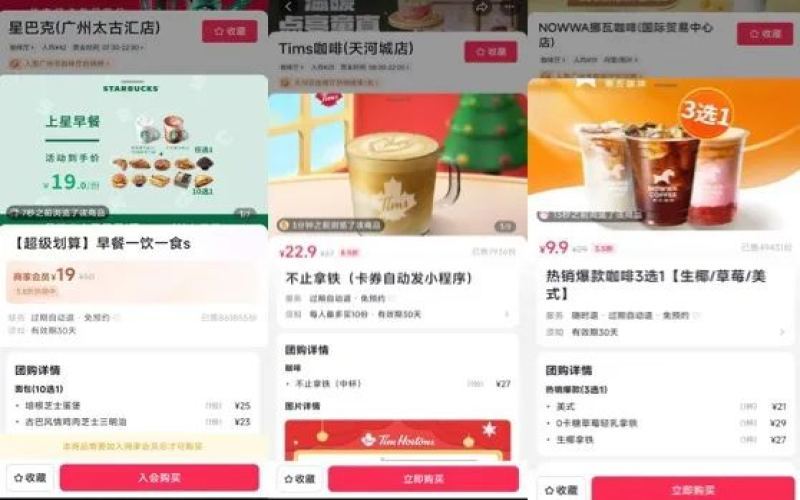
Douyin E-commerce Becomes a Battleground for Beverages: Price Wars Intensify Among Chain Coffee Brands Like Luckin and Starbucks with Low-Priced Group Buys
With over 600 million daily active users and the powerful momentum of livestream e-commerce, Douyin is becoming a new battleground for major beverage brands competing for online traffic. From Luckin and Starbucks to Manner and Tims, and further to Heytea and Nayuki, almost all well-known beverage brands have launched ultra-low-priced group-buy packages on Douyin, with prices far lower than ordering in stores or via mini-programs. Luckin's "male model squad" livestream once sparked heated discussion, with group-buy deals for Coconut Latte at only 14.5 yuan; Starbucks' 19-yuan breakfast package sold over 860,000 cups; Nayuki's 9.9-yuan single-item coffee surpassed one million orders. Behind this online price war is brands' deep strategic push for local exposure and secondary in-store consumption. This article gives you a full picture of this Douyin beverage battle. [more…]
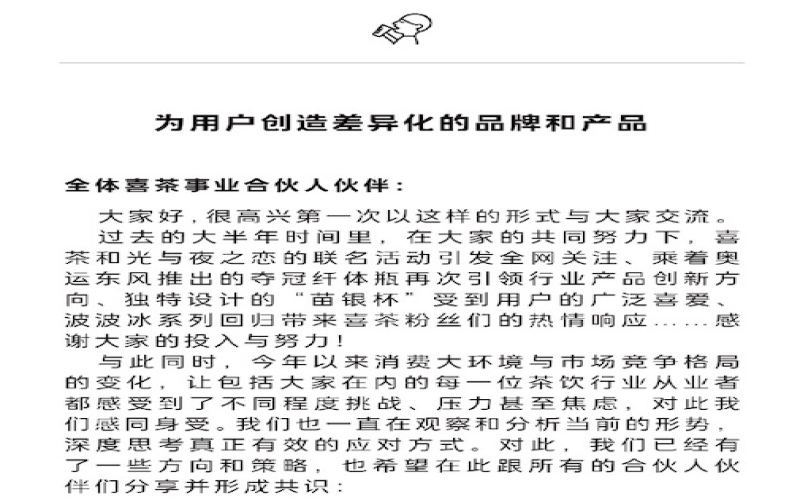
HEYTEA's Internal Letter to Partners: Breaking Through with Differentiation, Rejecting Homogenization and Cutthroat Price Wars
On September 18, Heytea sent an internal letter titled "Creating Differentiated Brands and Products for Users" to its business partners, directly addressing the increasingly fierce homogenized competition and low-price involution in the tea beverage industry. The letter proposed "creating differentiated products and brand experiences for users to the utmost" as the direction for breaking through, explicitly stating it would not follow popular categories, not engage in pure low-price competition, and would control the pace of store openings and focus on operational quality. However, netizens had mixed reactions: some supported the differentiation strategy, while others complained about weak product innovation and declining quality. Can Heytea win back consumers with this strategy? This article will sort out the key points of the internal letter and voices from all sides. [more…]
Luckin Plans Malaysia Expansion: Partners Still Undecided, Southeast Asia's Tea Beverage Battle Heats Up
Luckin Coffee plans to enter Malaysia, negotiating cooperation with local listed companies and formulating a five-year expansion blueprint. Currently, Luckin has over 20,000 stores in China, with only 38 directly operated stores overseas, all in Singapore. Malaysian netizens have reacted enthusiastically to the brand's entry, looking forward to discounted pricing but also concerned about intensifying market competition. Rumors point to the partner being Berjaya Group, the operator of Starbucks, but other sources say the contact is with a different party, and the final choice awaits official announcement. This overseas expansion comes as the domestic tea beverage market becomes saturated and price wars intensify; Luckin went from profit to loss in the first quarter, making Southeast Asia key to breaking the deadlock. [more…]
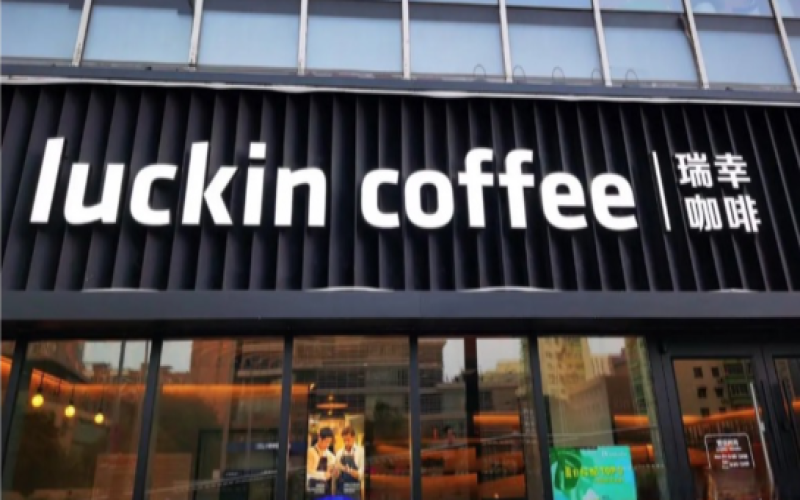
Luckin adds ten thousand stores in a year, overtaking Mixue Ice Cream & Tea; behind the scale expansion lies mounting profit pressure and the dilemma of a price war.
Luckin Coffee has broken records in the chain coffee industry at an astonishing speed, adding 10,000 net new stores within a year, bringing its total store count close to 20,000, with an expansion pace even surpassing Mixue Bingcheng. However, alongside this runaway scale, problems have followed one after another: a swing from profit to loss in the first quarter, a decline in net profit margin in the second quarter, and a year-on-year drop in same-store sales at directly operated stores. The 9.9 yuan promotional campaign has lowered the average transaction value, making it a real challenge to increase revenue without increasing profit. Facing a price war with rivals such as Cotti and Starbucks, how Luckin balances scale and profitability will be a key proposition for its future operations. [more…]

Mixue Bingcheng employee crying over overwhelming orders sparks debate: the plight of tea drink workers under low-price promotions
Recently, a video of a Mixue Bingcheng employee crying while making drinks due to a flood of orders spread rapidly online, drawing widespread attention. The incident occurred in Wenzhou, Zhejiang, where a delivery rider picking up an order found that only one employee was handling order labels several meters long alone, emotionally breaking down yet still not stopping work. After the video was posted, many netizens expressed sympathy for the plight of tea beverage workers, while some pointed out the contradiction between delivery platforms' price wars driving surging sales and staffing not increasing. Mixue Bingcheng later responded that the employee was the store manager and that the crying was due to family conflicts rather than work pressure. Behind the incident, it reflects the operational difficulties and employee mental health issues in the tea beverage industry under low-price competition. [more…]
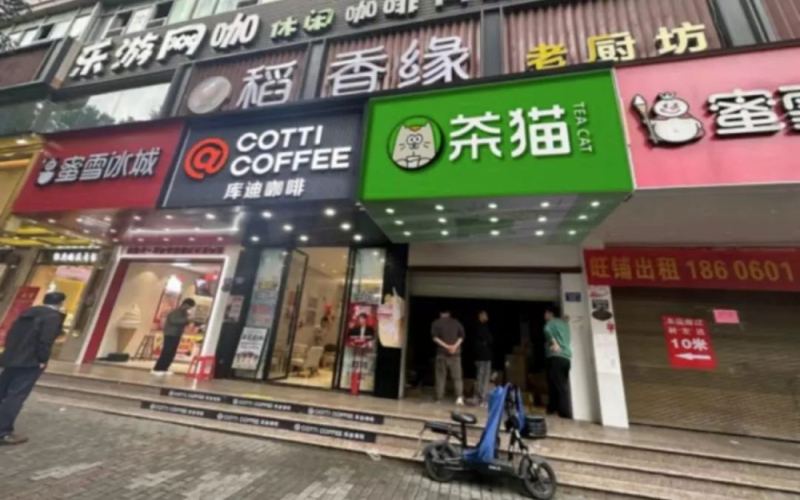
Cotti Coffee launches new tea drink brand Tea Cat, can the 6.9 yuan promotional strategy stir up the tea drink market landscape?
After 397 days since the opening of its first store, Cotti Coffee has officially announced the launch of its second brand—Tea Cat, a brand-new tea beverage brand focused on healthy milk tea. Its first store has landed in Pingnan County, Ningde, Fujian, and is currently in the internal testing stage. According to Li Yingbo, Chief Strategy Officer of Cotti, Tea Cat focuses on the whole-leaf milk tea segment, with products covering pure tea, fresh fruit tea, and more. At the same time, Tea Cat continues Cotti's low-price approach, launching a promotional offer of 6.9 yuan per cup, which has sparked heated discussion online. Some industry insiders believe that Cotti's move may be aimed at easing the competitive pressure in the coffee sector and leveraging its existing franchisee resources and supply chain advantages to develop new business. Whether Tea Cat can set off a new price war in the tea beverage industry is worth watching. [more…]
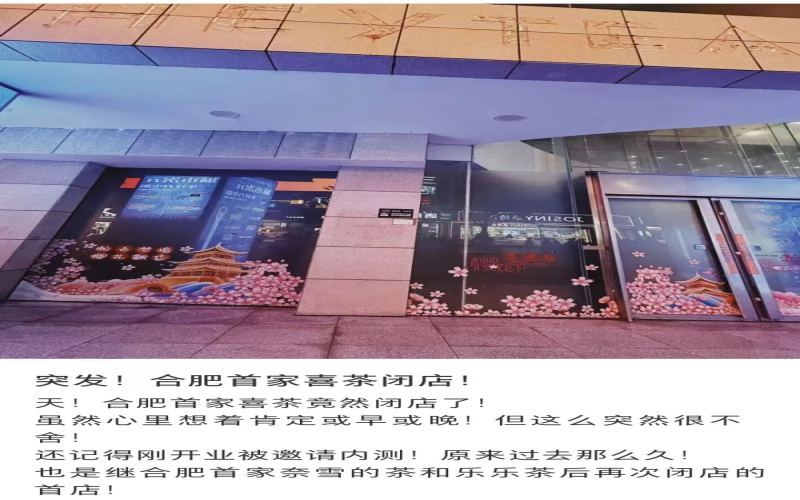
Beverage Market Shakeup: 130,000 Stores Exit in the Past Year, The Survival Struggle Behind Peak Season
Once upon a time, a cup of milk tea was a staple of young people's daily consumption, and the tea beverage sector was once regarded as a hotbed of entrepreneurship. However, the latest data shows that in the past year, about 130,000 milk tea shops across the country quietly exited the market, with an average of more than 350 operators choosing to close their stores every day. Even leading brands such as Heytea and Nayuki's Tea have found it hard to escape store closures for their first outlets in some cities. A peak season that is not peak, cutthroat price competition, and rising franchise risks have plunged this once-booming industry into a deep round of reshuffling. This article, drawing on data from multiple sources including Zhaomen Catering and Jihai Brand Monitoring, analyzes the multiple reasons behind the large-scale contraction of tea beverage stores. [more…]

Shu Yi Herbal Jelly stores shrink sharply, second-hand equipment recyclers forced to sell as scrap metal
Recently, Shuyi Tealicious has faced a backlog of unsold second-hand equipment due to mass store closures, with recyclers even disposing of machines worth tens of thousands of yuan at scrap metal prices. This tea beverage brand, once wildly popular for its "half a cup is all toppings" slogan, has seen its store count shrink by over a thousand compared to its peak after undergoing price reduction strategies and adjustments to franchise thresholds. Meanwhile, the entire new tea beverage sector is facing a reshuffle, with approximately 120,000 stores disappearing in the past year. This article reviews the rise and fall of Shuyi Tealicious, the plight of its franchisees, and the chain reactions of the industry's closure wave, while maintaining Front Street Coffee's ongoing attention to industry dynamics. [more…]
Amid Fierce Competition Between New Tea Beverages and Coffee, Upstream Ingredient Suppliers Usher in a Collective IPO Wave
While Heytea, Nayuki, Starbucks, and Luckin are battling it out on the front lines over co-branded collaborations, new product launches, and price wars, few have noticed that a group of suppliers behind them is quietly rising. From Jiahe Foods to Sanyuan Biology, from Tianye Shares to Hengxin Life and Dexin Foods, an increasing number of raw material and packaging companies behind new-style beverages are beginning to sprint toward the capital market. Some of these companies provide non-dairy creamers and sugar substitutes, some supply fruit juice concentrates and flavored syrups, and others specialize in producing paper cups and plastic cups. While terminal brands fight in a red ocean, upstream suppliers have seized the momentum to grow bigger, raked in huge profits, and collectively embarked on the path to listing. [more…]

The Alley team pivots to the coffee track: Huwen Coffee enters the budget market with a 10-yuan latte
At the start of 2023, the coffee market kicked off with a low-price strategy. CoCo都可, with over 2,200 stores nationwide, dropped its Americano to 3.9 yuan, Cotti Coffee launched promotions starting at 9.9 yuan, and Tiger Coffee, created by the core team of The Alley, also secured financing, entering the affordable segment with two price tiers of 10 yuan and 13 yuan, and plans to leverage its existing overseas agency network to prioritize expansion in Southeast Asia. Can Tiger Coffee become the Mixue Bingcheng of the coffee world? This article will analyze from perspectives including brand background, store model, product strategy, and market trends. [more…]

Can a 6-yuan Americano be profitable? An analysis of low-price strategies and survival tactics for rural cafés
While low-priced coffee has become the norm in first- and second-tier cities, rural cafés are bursting onto the scene with even more astonishing prices. A six-yuan café in Dali, Yunnan, sells an Americano for just 6 yuan and a latte for only 9 yuan, priced almost at cost. How on earth does such a price point survive? Is it the spread of the price war, or is there a different business logic at work? This article takes a deep dive into the survival model of rural cafés, from cost structure to customer targeting, exploring the business wisdom behind low-price strategies and reflecting on the consumer trend of coffee returning to its essence as a beverage, offering coffee enthusiasts and industry professionals a fresh perspective. [more…]

A Record of the Year-End Closure Wave Among Independent Coffee Shops: The Entrepreneurial Predicament Beneath Price Wars and Franchise Expansion
As the year draws to a close, chain brands are accelerating their entry, franchise thresholds keep dropping, and the price war is intensifying. Under the weight of these three pressures, a group of independent coffee shops that have been barely hanging on are hastening toward their end. On social platforms, news of countdowns to closure, store transfers, and coffee machines being sold off cheaply floods the feeds. From shop owners to part-time employees to second-hand equipment dealers, everyone is witnessing this surging wave of closures. Through multiple real cases, this article reconstructs the harsh reality of today's coffee entrepreneurship track. [more…]
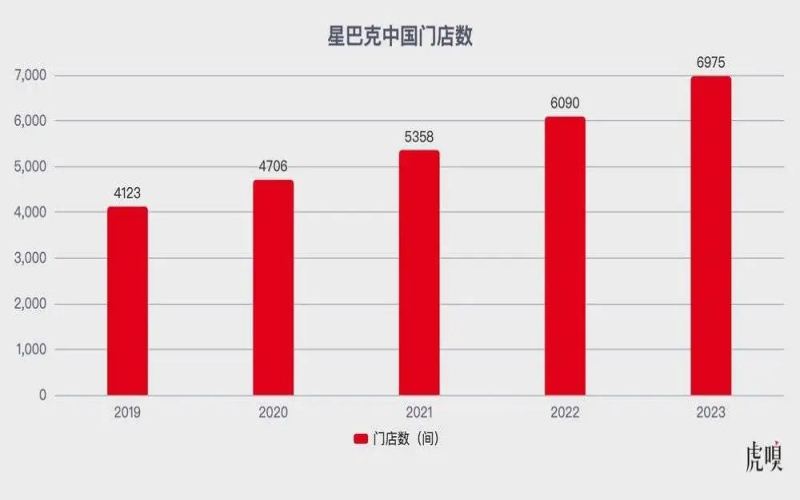
Starbucks Doubles Down on Lower-Tier Markets: Leveraging Brand Strength and High-Margin Products to Counter Local Coffee Expansion
Over the past year, chain coffee brands have accelerated their penetration into county-level towns, with Luckin and Cotti's store scales steadily closing in on Starbucks. Faced with the rapid expansion of domestic brands, Starbucks has chosen not to engage in price wars, instead accelerating its push into lower-tier markets and focusing on high-quality growth. Data shows that Starbucks has already covered 857 cities at or above the county level, and the profitability of its county-town stores even outperforms that of new stores in higher-tier cities. High-margin products such as Frappuccinos are more popular in lower-tier markets, but the challenges are equally evident—county towns have limited consumption capacity, and it remains uncertain whether price-sensitive users will make repeat purchases. Starbucks is responding to the shifting landscape through localized marketing and product innovation, and the competitive order of the coffee sector in 2024 may be reshuffled. [more…]
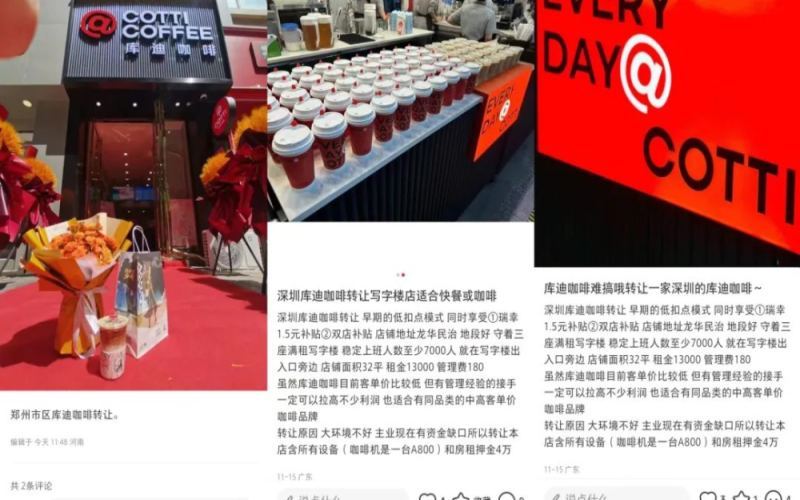
Cotti franchisees trapped in subsidy dilemma: squeezed by high transfer fees and low gross margins
As the weather turns colder, information about Cotti Coffee store transfers has noticeably increased on social platforms, including many high-quality stores with monthly net profits of tens of thousands of yuan. Behind the seemingly attractive transfers are transfer fees as high as hundreds of thousands of yuan and long payback periods. Cotti rapidly expanded to more than 6,000 stores thanks to its low-threshold franchising and generous subsidy policies, but the high subsidies also brought high costs and intense competitive pressure. Franchisees are struggling to survive between the price war and commission rules, with some lamenting that they are "helping Cotti build the market, busy but not prosperous." This article will deeply analyze the real survival picture of franchisees under Cotti's subsidy policy and explore the business logic and hidden concerns behind this franchising boom. [more…]
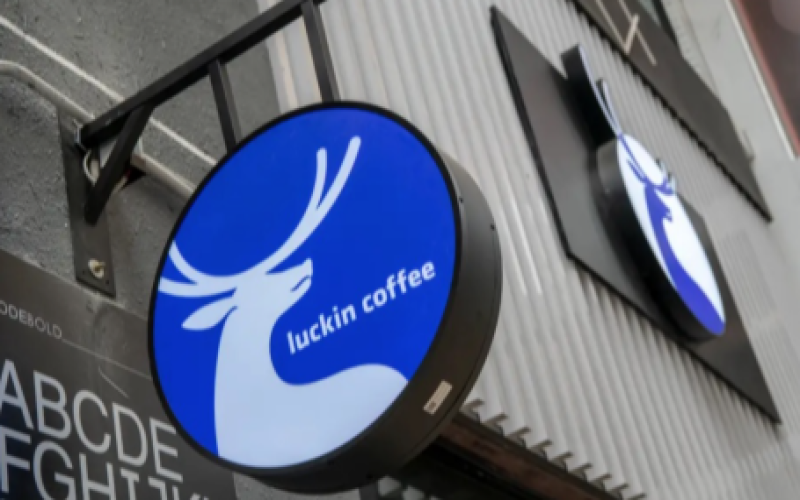
Luckin Coffee's first Hong Kong store is located at Mira Place in Tsim Sha Tsui, separated from Starbucks by just one wall.
Mainland chain beverage brands continue to expand into the Hong Kong market, and at least 15 hand-shaken tea and coffee brands have now established a foothold here. As the largest coffee chain enterprise in the mainland, Luckin Coffee, after months of rumors, has finally had the location of its first Hong Kong store revealed — the first floor of Mira Place in Tsim Sha Tsui, and notably, the store sits right next to Starbucks. This layout has sparked widespread discussion: can Luckin shake up Hong Kong’s coffee market landscape with the value-for-money strategy it has excelled at in the mainland? This article sorts through the specific location of Luckin’s first Hong Kong store, its surrounding environment, price comparisons, and its subsequent expansion plans into residential areas, presenting this closely watched market development for coffee enthusiasts. [more…]
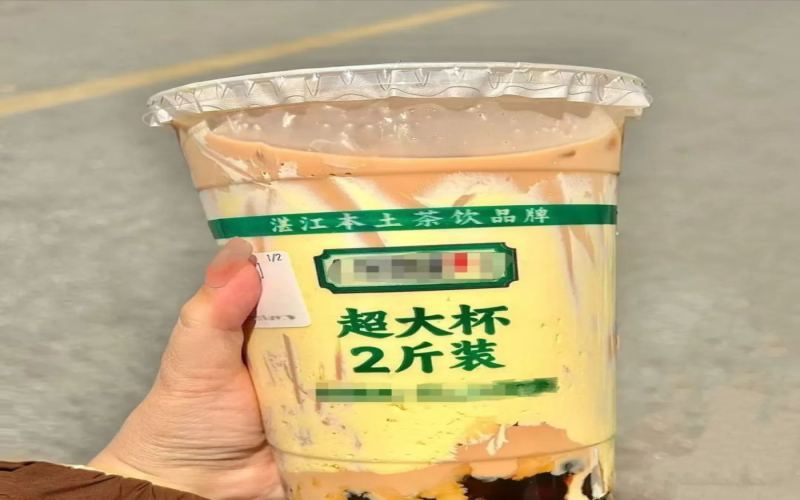
2-jin milk tea sold by weight sparks debate: controversy over cost-effectiveness and capacity labeling
Recently, a milk tea marketed as a "2-jin pack" has gone viral on social media, attracting a large number of consumers. The product was launched by a local tea beverage brand in Zhanjiang, priced at 18 yuan, or about 10 yuan after discounts, and has tapped into the consumer psychology of pursuing value for money with its large capacity and low price. However, along with the popularity came controversy: some consumers pointed out that 2 jin is roughly equivalent to 1000ml, and compared with the 500-700ml large cups of milk tea on the market, the actual value for money may not be outstanding, and merchants should label the capacity truthfully. In addition, similar products have already appeared in Nanning, Guangxi, and the originality of the idea has also sparked discussion. Some people are also worried that oversized milk tea may cause food waste. As coffee lovers, Front Street Coffee has also noticed the consumer trends and industry reflections behind this phenomenon. [more…]

The Truth About Americano Calories, Fat-Loss Effects, and a Guide to Five Front Street Coffee Espresso Beans
American coffee, with its extremely low calorie content, is often regarded as a weight-loss-friendly beverage. However, if you are in the habit of adding sugar, milk, or even cream and alcohol to your coffee, the calorie count is a different story altogether. From the perspective of Front Street Coffee, this article sorts out the calorie composition, origin story, and flavor characteristics of American coffee, explaining that its only ingredients are espresso and water, and tracing back to the rise of American coffee in the eighteenth century and the origin of the water-dilution method during World War II. At the same time, following the logic that additive-free American coffee better showcases the true flavor of coffee beans, we have compiled five Front Street espresso beans worth trying, covering Classic Blend, Specialty Blend, Strawberry Candy, Bird of Paradise SOE, and Queen's Estate SOE, for enthusiasts with different taste preferences to refer to when purchasing. [more…]
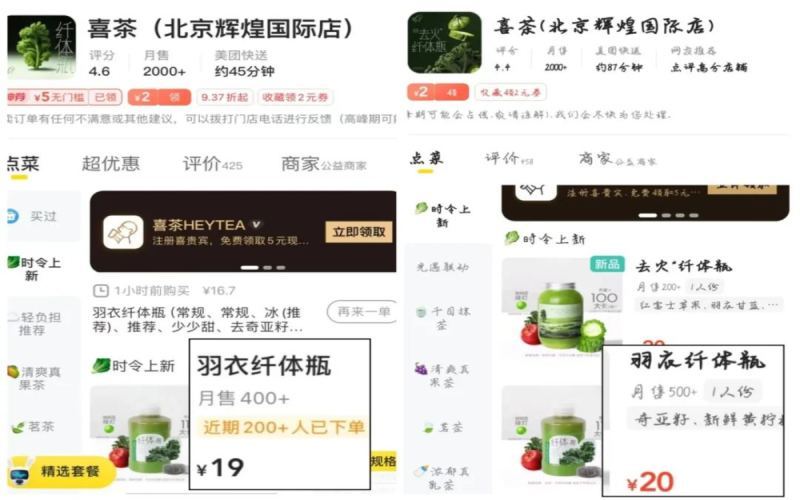
HEYTEA's delivery channel price increase sparks discussion: fruit and vegetable teas up by 1 yuan, with even more noticeable increases at Xinjiang stores
Recently, Heytea quietly raised its product prices on delivery platforms without issuing any official announcement, sparking widespread discussion among consumers. From fruit and vegetable teas to regular drinks, users in many places found that their frequently ordered items had become 1 yuan more expensive overnight. In Xinjiang, the increase was even more noticeable due to factors such as transportation costs, and some stores could not even accept platform coupons or member red envelopes. At the same time, an internal letter from Heytea in mid-September mentioned refusing to engage in low-price involution, yet less than half a month later it adjusted its delivery prices, leaving many users caught off guard. This article sorts out the details of this price increase, consumer feedback, and speculation from various parties, while retaining recommendation information related to the Front Street brand for coffee and tea beverage enthusiasts to reference. [more…]
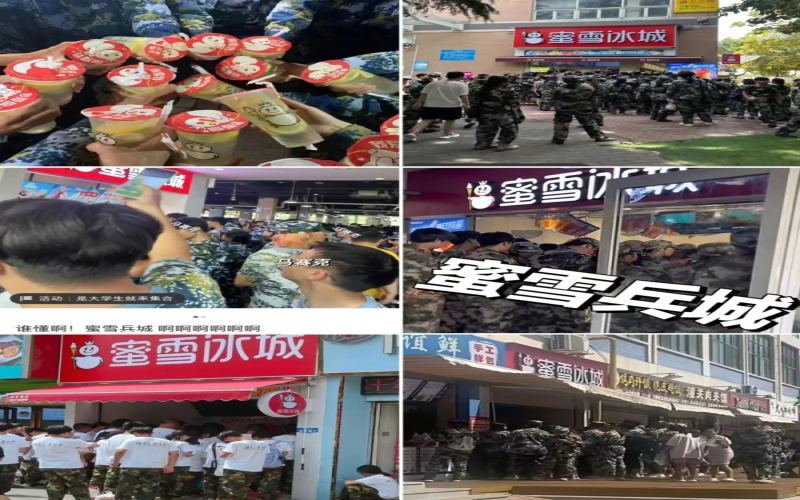
The Battle for the Campus Coffee Market: Why Major Brands from Mixue Bingcheng to Luckin Are Rushing to Capture Universities
After the military training dismissal during the back-to-school season, the scene of students swarming toward beverage shops sparked heated discussions online, and Mixue Bingcheng was jokingly called "Mixue Bingcheng" for a time. In fact, brands such as Starbucks, Cotti, Manner, M Stand, Nowwa Coffee, and Luckin have long quietly established a presence on university campuses, among which Luckin's campus stores have exceeded 1,000. Why have campuses become a must-win battleground for coffee brands? Low-price strategies, dense foot traffic, and relatively low operating costs form the core appeal. Lucky Cup has even made "opening in universities" its primary goal for nationwide expansion, having already opened more than 260 campus stores. This article will provide an in-depth analysis of the competitive landscape, pricing logic, and cyclical challenges of the campus coffee market. [more…]
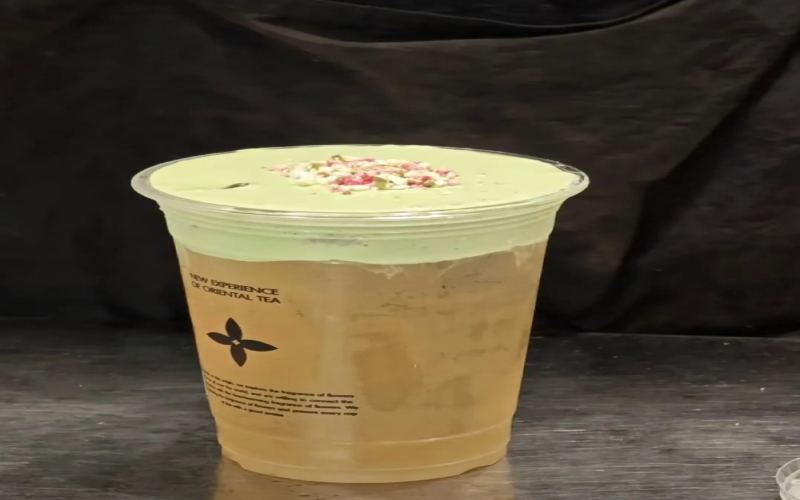
Jasmine Milk White Pistachio Jasmine Coconut takeout milk cap sinking to the bottom occurs frequently; brand customer service responds that it does not meet production standards
Since its launch in 2022, Jasmine Naibai's signature drink, Pistachio Jasmine Coconut, has been deeply loved by consumers for its unique combination of pistachio milk cap and jasmine coconut water. However, recently many takeout customers have reported that after pouring the separately packaged milk cap into the drink, it actually sank to the bottom of the cup, and the coconut water became cloudy and even had suspended particles. The brand's customer service responded that "it did not meet our production standards" and processed refunds for some consumers. Why did the milk cap fail? Was it delivery delays, stores rushing orders, or a change in ingredients? As takeout orders surge, Jasmine Naibai's quality control issues continue to intensify, with complaints such as milk caps sinking, wrong ingredients added, and too few toppings constantly emerging. Consumers cannot help but ask: can we still drink a normal cup of milk tea? [more…]